
In conversation
In this interview with Celine Moran, Anu Chhabra-Coulter discusses her efforts to empower women in finance through innovative events and strategic partnerships within the industry.
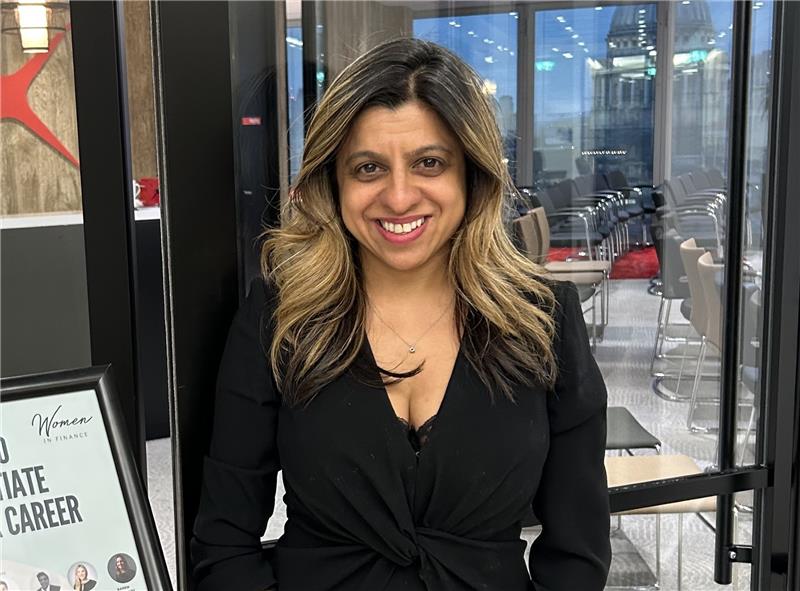
I met Anu at one of her events through the Women in Finance Group a couple of years ago, and found myself surrounded by a wonderful group of smart, kind and like-minded people. Since then, I’ve watched Anu build something really special, from panel discussions and a sports and wellbeing series, to partnerships with leading financial firms aimed at educating women in the sector. Her approach is both inspiring and refreshingly original; most of her events are designed not just to inform, but to create genuine space for women to connect and grow. I sat down with Anu to ask her a few questions about her work and the gender gap in financial services. Enjoy!
You founded Women in Finance Group in 2021 with a mission to empower and connect women in financial services. Was there a particular moment that made you feel this gap most acutely?
No, it was the accumulation of many small ones. The networking events where most speakers were or still are male. The meeting where my point was heard only after a male colleague repeated it. The talented colleague who quietly left the industry after her second child because returning felt impossible. What struck me most wasn’t that these things happened, but how normalised they had become over time. Women weren’t complaining enough; they were simply adapting, shrinking, or leaving. I founded the Women in Finance Group because I believed that if we created the right environment for women where they could thrive and I believe it’s worked.
Women in Finance Group offers a broad range of resources, from mentorship to sports and wellbeing workshops. Why do you think opportunities and groups like yours are so important for women in the sector?
Financial services has a retention problem more than a pipeline problem. Women enter the industry in reasonable numbers but leave at a disproportionate rate at mid-career precisely when they should be stepping into leadership. The reasons are rarely dramatic; they’re cumulative; Isolation, invisible workloads, lack of flexibility and a networking culture that doesn’t accommodate them. What we try to do is address that whole person, not just the professional on paper. Mentorship matters, but so does having a community where you can be honest about the harder parts of the job and find other like minded individuals. The wellbeing and sports events aren’t peripheral — they’re the moments where real conversations happen and real relationships form. Those relationships are what sustain careers over the long term.
DEI has become a much more contested space in recent years, with some firms quietly scaling back their commitments. From where you sit, what does genuine progress actually look like in financial services?
The problem is that many firms treat diversity as a reputational exercise rather than treating it as a business discipline – with targets, measurement, and outcomes which makes it less dramatic and more durable. The rollback we’re seeing from some firms is, I think, the inevitable unwinding of commitments that were never properly embedded in the first place. They were responses to a moment rather than structural change. Real progress looks like a firm where the gender composition of its leadership doesn’t change depending on the political landscape. Senior leaders should be genuinely accountable for the progression of the people they champion, framing DEI as a business case and not a moral one. Genuine progress in embedding DEI should be structural and not performative.
Career progression remains uneven for women in financial services, particularly at senior levels. What are the most persistent structural barriers, and where do you see real momentum for change?
The most persistent barrier is informal. It’s the deal sourced over golf, the introduction made at networking drinks, the opportunity extended because of proximity and comfort rather than capability. Women are often excluded not by policy but by culture. Unfortunately, culture is slower and harder to change than policy. That said, I do see real momentum in a few places. The Investor community is increasingly asking Managers direct questions about their diversity data, which creates commercial pressure that nothing else can replicate. I’m also encouraged by the generation of mid-career women who are demanding sponsors rather than just mentors, and creating the critical mass that makes a difference.
For younger women entering financial services today, what is the one piece of advice you find yourself giving most often?
Build your network before you need it. This sounds simple, but in practice most people only start networking when they’re job-hunting, looking to acquire clients etc, which is exactly the wrong time, because it makes every conversation feel transactional. The relationships that genuinely move careers forward are built slowly and without an immediate agenda. Go to the events, follow up and be useful to people. And specifically: find communities like ours where the room is already on your side. The longer I work in this industry, the more I’m convinced that your network is your most durable professional asset.

- March, Newsletters, Out and about

- Liminal view, March, Newsletters